In the competitive woven-plastic packaging industry, standard PP woven sacks and FIBCs (jumbo bags) remain volume drivers. However, market saturation and tightening profit margins have led many forward-thinking manufacturers to seek higher-margin, specialized product lines.
Monofilament mesh bags (circular/knitted net bags) represent one of the most practical and profitable niche extensions for existing woven plastic factories and new regional packaging projects.
Whether you are looking to source high-quality finished mesh bags or set up an in-house monofilament mesh bag production line, this guide explores market demand, production requirements, and how to transition from traditional weaving to automated mesh bag manufacturing.
What Makes Monofilament Mesh Bags Unique?
Unlike conventional PP woven sacks that feature a flat, closed-weave surface, monofilament mesh bags are produced by forming monofilament yarn into a tubular mesh structure.
This specialized structure delivers three vital functional benefits:
- Maximum Ventilation: Essential for post-harvest agricultural produce that releases heat and moisture.
- Product Visibility: Allows distributors, retailers, and end-customers to inspect fresh produce or firewood without opening the package.
- High Tensile Strength: Monofilament yarn provides superior puncture resistance and load-bearing performance compared to standard multifilament mesh.
High-Demand Market Applications & Regional Insights
Demand for monofilament net bags is application-driven, serving agricultural packhouses, firewood exporters, seafood packaging, date palm plantations, and other applications that require ventilation.
1. Fresh Produce & Agricultural Packaging
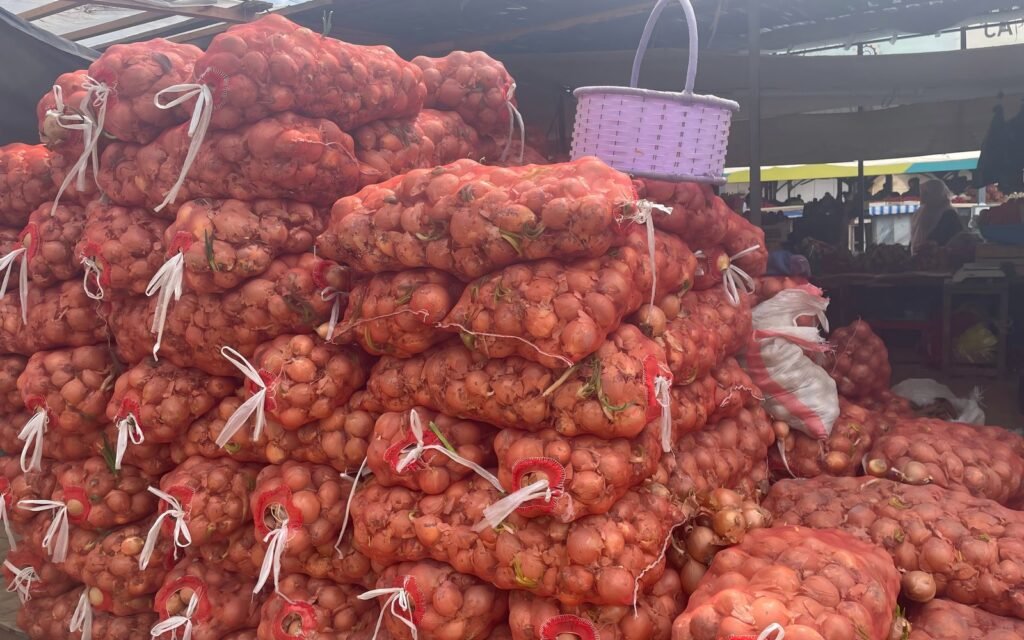
- Onions & Garlic: Require continuous airflow during handling, ocean freight, and long-term storage to prevent mold and rotting.
- Potatoes & Citrus Fruits: Demand high load capacity (typically 5 kg to 30 kg) and color-matched mesh for retail presentation.
- Firewood & Log Bags: Popular in European and North American markets for eco-friendly timber distribution and ventilation.
- Seafood&ventilation goods
2. Date Palm Protection (Middle East Region)
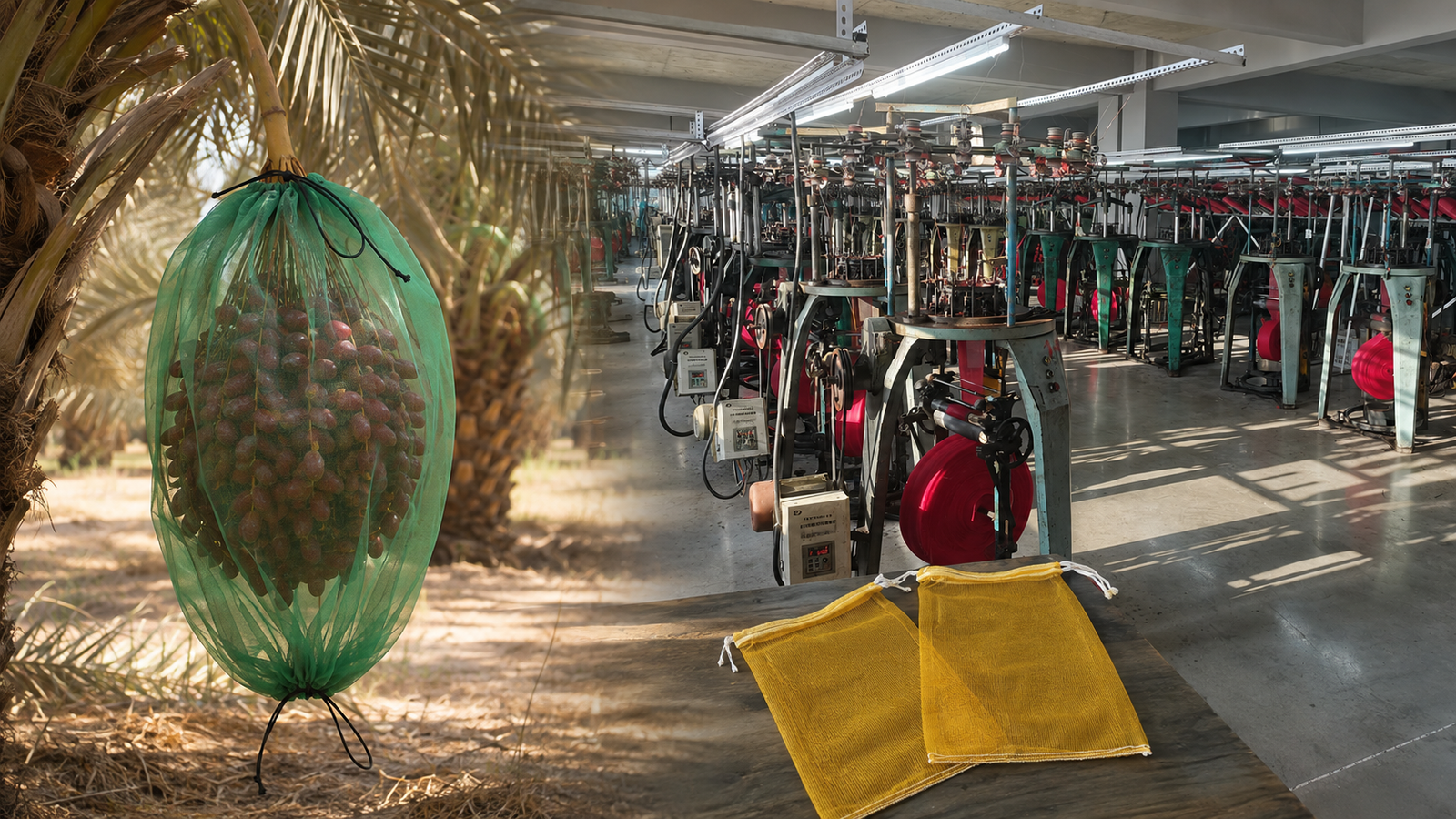
In arid agricultural regions like Saudi Arabia and the UAE, monofilament mesh covers play a critical role in protecting developing date bunches from birds, insects, desert dust, and sunburn while permitting light and air penetration.
- Saudi Arabia: According to the Saudi General Authority for Statistics, the Kingdom produces approximately 1.923 million tonnes of dates annually across 32 million productive palm trees. In this market, 80 × 100 cm is a widely preferred date cover size.
- United Arab Emirates (UAE): Based on WELLZO’s manufacturing experience, orders frequently target 70 × 90 cm mesh covers to fit local farm handling practices.
Source: General Authority for Statistics, Saudi Arabia
Can an Existing PP Woven Bag Factory Produce Monofilament Mesh Bags?
Yes. Existing PP woven bag manufacturers already possess core expertise in resin processing, extrusion dynamics, and factory management. However, monofilament mesh production requires dedicated, purpose-built machinery and distinct process parameters.
Standard Production Flow
- Monofilament Extrusion: High-density polyethylene (HDPE) is processed in a monofilament extrusion machine to produce yarn. Yarn consistency and tenacity directly govern knitting speed and net strength.
- Circular Knitting / Weaving: Specialized circular mesh knitting machines form continuous tubular fabric. Machine gauge and diameter determine bag width and mesh density.
- Conversion & Finishing: Tubular fabric is cut to length, equipped with drawstrings, stitched, and packed.
Important Note: A standard PP flat yarn extruding line or circular loom cannot directly produce high-quality monofilament mesh bags without modification. Success requires specialized monofilament extruders and knitting units.
For a detailed equipment overview, read our guide to building a monofilament mesh bag production line.
Turnkey Production Lines: From Machinery Setup to Finished Products
Expanding into a new packaging category can be complex. Purchasing machines without technical support often results in high waste rates, yarn breakage, and improper machine calibration.
WELLZO provides complete end-to-end solutions (Equipment + Technology + Raw Material Guidance):
For investors and manufacturers planning local production, WELLZO offers comprehensive Turnkey Factory Solutions:
- Plant Design & Equipment Selection: Matching extruder capacity and knitting machine counts to your target market output.
- Full Production Equipment: High-speed monofilament extrusion lines, tubular mesh knitting machines, automatic cutting, and sewing/drawstring conversion equipment.
- On-Site Installation & Process Commissioning: Our engineers handle line setup, masterbatch/UV recipe optimization, and machine calibration at your facility.
- Operator Training & SOPs: Complete practical training for your local technical crew—covering yarn tensioning, mesh adjustment, and routine maintenance.
Prefer Sourcing Finished Bags First?
For distributors and packaging importers, WELLZO also supplies finished, custom-branded monofilament mesh bags in full container loads, allowing you to test local market demand before making a capital investment in machinery.
Key Project Checklist Before Buying Equipment or Bags
To help us recommend the exact machinery configuration or bag specifications for your project, prepare the following details:
- Target Application: (e.g., 20 kg Onions, Firewood, Date Palm Covers)
- Required Bag Dimensions: (Width × Length in cm/inches)
- Load Capacity & Mesh Size: (e.g., 10 kg load, 5 mm × 5 mm mesh opening)
- Finishing Requirements: (Top drawstring, sewn bottom, UV resistance parameters)
- Target Capacity: (Daily/Monthly output requirement in pieces or tons)
- Facility Status: (New factory investment or expanding an existing PP woven plant)
Frequently Asked Questions (FAQ)
Q1: What is the main technical difference between monofilament mesh bags and raschel mesh bags?
Monofilament bags are knitted using solid HDPE monofilament yarn, resulting in higher stiffness, tensile strength, and abrasion resistance. Raschel mesh bags often use flat tape yarns and are softer, making them better suited for lightweight retail packaging.
Q2: What UV resistance level is required for outdoor mesh bags?
For date palm protection or outdoor agricultural storage, UV masterbatch additives are essential. Depending on local UV index levels (e.g., Middle East or South America), WELLZO configures yarn formulas to withstand 1200–2000+ hours of intense sunlight exposure.
Q3: Does WELLZO provide production formulas and technical training?
Yes. When you order a complete monofilament production line, WELLZO engineers provide complete raw material mixing ratios, temperature parameters, and hands-on factory training until your team produces qualified bags independently.
Start Your Monofilament Mesh Project with WELLZO
Whether you need a reliable supplier for finished agricultural mesh bags or an engineering partner to design and install a full monofilament net bag production line, WELLZO delivers the equipment, process know-how, and long-term support you need.
👉 Contact WELLZO Technical Sales to discuss your project specifications and receive a tailored quote or factory feasibility analysis today.